Video
Nakshatras 19–27 explained: Mula, Ashadha, Shravana, Dhanishta to Revati
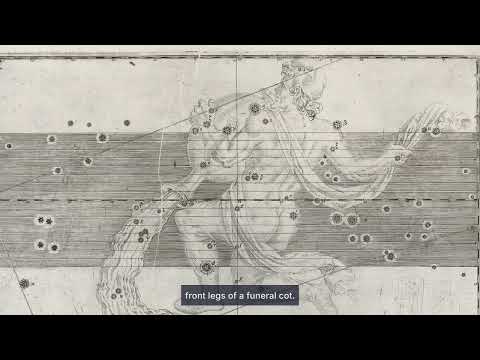
Plays from YouTube (privacy-enhanced mode) when you press play.
The last nine of the 27 lunar mansions, Mula to Revati (sidereal Sagittarius to Pisces): the deity, ruling planet, symbol and energy of each, the third round of the Vimshottari lords, why Mula points at the galactic centre, and how to find your own nakshatra.
Chapters
- 0:00 The last nine
- 0:37 The third round
- 1:11 Mula, Purva Ashadha, Uttara Ashadha
- 2:37 Shravana, Dhanishta, Shatabhisha
- 3:56 Purva Bhadrapada, Uttara Bhadrapada, Revati
- 5:23 Find your nakshatra
- 5:50 Recap
Transcript
The last nine
Twenty-seven nakshatras divide the sky into equal lunar mansions of thirteen degrees and twenty minutes. We have met the first eighteen, from Ashwini to Jyeshtha. Today we meet the last nine, from Mula to Revati, and complete the circle. Together they fill the last four signs of the sidereal zodiac: Sagittarius, Capricorn, Aquarius and Pisces. And where the last of them ends, the first begins again.
The third round
First, the pattern, for the third and final time. The lords of these nine nakshatras follow the same Vimshottari order: Ketu, Venus, the Sun, the Moon, Mars, Rahu, Jupiter, Saturn and Mercury. So Mula, the nineteenth, is ruled by Ketu, like Ashwini and Magha. And Revati, the twenty-seventh, is ruled by Mercury, like Ashlesha and Jyeshtha. Three rounds of nine lords make twenty-seven.
Mula, Purva Ashadha, Uttara Ashadha
Mula is the nineteenth nakshatra, the first thirteen degrees and twenty minutes of Sagittarius. Its deity is Nirriti, the goddess of dissolution, and its lord is Ketu. Its name means the root, and its symbol is a bundle of roots tied together. Its stars are the curled tail and sting of the Scorpion. Mula is the energy of getting to the bottom of things: research, radical questioning, and uprooting what is false.
Purva Ashadha, the twentieth, also lies in Sagittarius. Its deity is Apas, the cosmic waters, and its lord is Venus. Its name means the former invincible one, and its symbol is a winnowing fan or an elephant's tusk. Purva Ashadha is the energy of conviction: the confidence that cannot be beaten, and a belief sincerely held. Uttara Ashadha, the twenty-first, begins at the end of Sagittarius and runs to ten degrees of Capricorn.
Its deities are the Vishvedevas, all the gods together, and its lord is the Sun. Its name means the latter invincible one. Uttara Ashadha is the energy of lasting victory: integrity, patience, and success that is earned slowly and kept.
Shravana, Dhanishta, Shatabhisha
Shravana, the twenty-second, lies in Capricorn. Its deity is Vishnu, the preserver, and its lord is the Moon. Its name means hearing, or listening, and its symbol is an ear, or three footprints. Its chief star is Altair. Shravana is the energy of learning through listening: wisdom handed down, and the quiet strength of someone who takes in before they speak.
Dhanishta, the twenty-third, spans the end of Capricorn and the start of Aquarius. Its deities are the eight Vasus, the gods of the elements, and its lord is Mars. Its name means the wealthiest, and its symbol is a drum. Dhanishta is the energy of rhythm and abundance: music, timing, and prosperity that comes from working in step with others. Shatabhisha, the twenty-fourth, lies in Aquarius.
Its deity is Varuna, lord of the waters and of the cosmic order, and its lord is Rahu. Its name means a hundred physicians, and its symbol is an empty circle. Shatabhisha is the energy of healing and hidden truth: research, solitude, and the search for the remedy.
Purva Bhadrapada, Uttara Bhadrapada, Revati
Purva Bhadrapada, the twenty-fifth, spans the end of Aquarius and the start of Pisces. Its deity is Aja Ekapada, the one-footed goat, and its lord is Jupiter. Its name means the former auspicious feet, and its symbol is the front legs of a funeral cot. Purva Bhadrapada is the energy of fierce idealism: burning conviction, and the willingness to sacrifice comfort for a cause. Uttara Bhadrapada, the twenty-sixth, lies in Pisces.
Its deity is Ahir Budhnya, the serpent of the depths, and its lord is Saturn. Its symbol is the back legs of the funeral cot, or twins. Uttara Bhadrapada is the energy of the deep, still water: patience, wisdom, compassion, and the calm that comes after the fire. Revati, the twenty-seventh and last, completes Pisces. Its deity is Pushan, the nourisher and guide of travellers, and its lord is Mercury.
Its name means the wealthy, and its symbol is a fish or a drum. Venus's exaltation point lies here. Revati is the energy of safe passage: kindness, guidance, and the completion of a journey. The end of Revati is the beginning of Ashwini, and of Aries.
Find your nakshatra
To find your own nakshatra, you need the Moon's exact position at your birth, in the sidereal zodiac. A free kundli on sunyra.ai shows it, with its pada, and the dasha it starts. And if you would like your whole chart read in depth, Sunyra's Full Kundli Report on sunyra.ai does that, from your own birth details.
Recap
To recap. The last nine nakshatras fill Sagittarius to Pisces, with the same nine lords in the same order. Mula the root, Purva Ashadha the conviction, Uttara Ashadha the lasting victory, Shravana the listener, Dhanishta the drum, Shatabhisha the healer, Purva Bhadrapada the fire, Uttara Bhadrapada the deep water, and Revati the safe passage. That completes all twenty-seven. Thank you for watching.
May your Moon find its mansion.
Astrology is a tradition of interpretation; read this as guidance, not a forecast. Disclaimer.