On this page
In short: Shravana is the twenty-second nakshatra, spanning 10° to 23°20′ of sidereal Capricorn. Its deity is Vishnu, the preserver, and its ruling planet is the Moon. Its name means "hearing" or "listening", and its symbol is an ear — or three footprints. Shravana is the energy of learning through listening: receptiveness, wisdom handed down, connection, and the quiet strength of someone who takes in before they speak. People with the Moon or ascendant here tend to be attentive, learned, devoted and well connected.
At a glance
| Number | 22 of 27 |
| Span (sidereal) | 10° Capricorn – 23°20′ Capricorn |
| Sign | Capricorn (Makara), padas 1–4 |
| Meaning | “hearing”, “listening” |
| Ruling planet (Vimshottari) | Moon — a 10-year dasha |
| Deity | Vishnu, the preserver |
| Symbol | An ear, or three footprints |
| Stars (traditional) | Altair (α Aquilae) with β and γ Aquilae |
| Gana (temperament) | Deva (divine) |
| Yoni (animal) | Monkey (female) |
| Nadi | Antya (Kapha) |
| Muhurta nature | Movable (chara) |
| Pada syllables | Khi (Ju), Khu (Je), Khe (Jo), Kho (Gha) |
The story: Vishnu's three strides
In the Rigveda Vishnu is the god of the wide stride. Hymn 1.154 praises him as the one "who measured out the earthly realms" in three steps, in whose three footprints all creatures dwell, and whose highest step is a place of honey-sweet delight. In the Puranas this becomes the story of Vamana, the dwarf (Bhagavata Purana 8.18–8.21): the generous asura king Bali, who had conquered the three worlds, offered the small Brahmin boy whatever he wished, and Vamana asked only for as much land as he could cover in three steps. Then he grew until his first step covered the earth and his second the heavens; for the third, Bali offered his own head. Vishnu, moved by his integrity, sent him to rule the underworld and promised to guard him.
Kerala remembers Bali — Mahabali — with love. The great harvest festival of Onam celebrates his annual visit to his people, and its main day, Thiruvonam, is the day the Moon is in Shravana (Onam in Malayalam) in the month of Chingam.
Shravana's two symbols fit together. The three footprints are Vishnu's order spread across the world; the ear is how that order is learned — by hearing. In Vedic culture, knowledge was shruti, "that which is heard", passed from teacher to student by listening.
In the sky
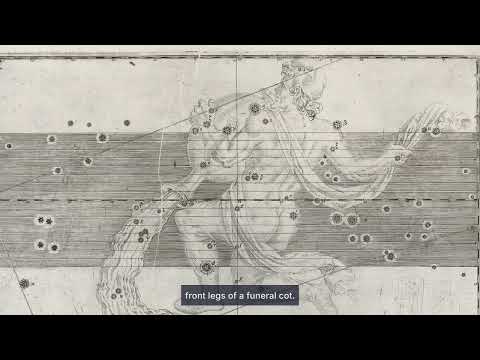
Shravana's stars are Altair (α Aquilae) and its two companions, β and γ Aquilae — a short, bright line of three stars in the Eagle, north of the zodiac, read as Vishnu's three footprints. The month of Shravana is named after the nakshatra near which its full Moon falls. That full Moon, Shravana Purnima, is the festival of Raksha Bandhan, and in many communities it is also Upakarma, when the sacred thread is renewed and Vedic study begins afresh.
The nature of Shravana
Muhurta texts class Shravana as chara, movable — suited to travel, vehicles and undertakings involving movement. Its temperament is deva, divine. The Moon rules it, giving receptiveness, memory and sensitivity, and it lies in Saturn's sign Capricorn, which gives discipline, patience and respect for tradition.
Shravana's core qualities are attentiveness, learning, devotion, organisation, wisdom and a gift for connecting people. It listens well — to teachers, to the people it serves, to what is not being said — and it often becomes a respected source of knowledge or advice.
Strengths
- Listening. Shravana hears what others miss.
- Learning. It absorbs and retains knowledge, especially from teachers.
- Devotion. Vishnu's nakshatra is often religious or idealistic.
- Connection. It builds networks and keeps traditions alive.
Challenges
- Sensitivity to criticism. The listening ear also hears every slight.
- Rigidity. Respect for tradition can become conventionality.
- Worry. The Moon in Saturn's sign can make it anxious or melancholic.
Shravana's growth often lies in listening to itself as carefully as to others.
The Moon in Shravana
The Moon is in its own nakshatra here, though in Saturn's sign. The emotional nature is receptive, thoughtful and steady, sometimes reserved. These people often have excellent memories and are moved by music, stories and sacred sound. They feel secure when they are learning and when they belong to a community or tradition.
The ascendant and other planets in Shravana
A Shravana ascendant tends to give a dignified, attentive face and a calm, listening manner. Saturn here, in its own sign, is disciplined and devoted. Mars in Capricorn is exalted in sign, strategic and effective, with its deepest exaltation just beyond, in Dhanishta. Jupiter in Capricorn is debilitated in sign, though its deepest debility point lies in Uttara Ashadha. The Sun transits Shravana from roughly late January to early February.
Pada by pada
| Pada | Span | Sign | Navamsa (D9) | Syllable |
|---|---|---|---|---|
| 1 | 10° Capricorn – 13°20′ Capricorn | Capricorn | Aries | Khi (Ju) |
| 2 | 13°20′ Capricorn – 16°40′ Capricorn | Capricorn | Taurus | Khu (Je) |
| 3 | 16°40′ Capricorn – 20° Capricorn | Capricorn | Gemini | Khe (Jo) |
| 4 | 20° Capricorn – 23°20′ Capricorn | Capricorn | Cancer | Kho (Gha) |
- Pada 1 (Aries navamsa). Energetic and ambitious; learning put to work with initiative.
- Pada 2 (Taurus navamsa). Steady and practical; wealth and comfort built through knowledge.
- Pada 3 (Gemini navamsa). Communicative and versatile; teaching, writing, languages and networks.
- Pada 4 (Cancer navamsa). Caring and emotional; devotion, family and nurture through tradition.
Reading Shravana in a chart
When a planet or the Moon sits in Shravana, look first at the Moon, the nakshatra lord: its brightness and placement show how receptive and steady the mind is. Then look at Saturn, the sign lord, which shows how patiently learning is turned into achievement. Finally, the house: Shravana in the 10th often describes a career built on knowledge and reputation; in the 9th, deep learning and devotion; in the 2nd, a gift for speech and teaching; in the 11th, wide networks. A planet here often gives some of its results in the Moon's sub-periods.
In relationships and matching
Shravana is a deva gana nakshatra, with the monkey as its yoni and Antya (Kapha) as its nadi. Its yoni pairs most naturally with Purva Ashadha, the other monkey nakshatra; the sheep nakshatras (Krittika and Pushya) are the monkey's traditional enemy.
In everyday terms, Shravana partners are attentive, loyal and supportive, and they need a partner who communicates openly and respects their values. They flourish in relationships built on conversation and shared learning.
Career and work
Shravana favours teaching and education, counselling, music and sound, languages and translation, media and broadcasting, religious and spiritual work, travel, administration, and any work that depends on listening well — from medicine to customer service.
Health as wellbeing
Shravana lies in Capricorn, linked with the knees and bones, and its symbol links it with the ears and hearing. As wellbeing, it benefits from quiet, music, good sleep and protection from noise. These are traditional associations, not medical advice.
The dasha connection
A person born with the Moon in Shravana begins life in the Moon mahadasha, ten years long. The balance remaining at birth depends on how far the Moon has travelled through the nakshatra. Mars's seven-year dasha follows, then Rahu's eighteen (BPHS ch. 46).
Muhurta: choosing a time
As a chara (movable) nakshatra, Shravana is traditionally favoured for journeys, buying vehicles, beginning study and other undertakings involving movement. Tithi, weekday and other factors are weighed together.
Traditional practice
For Shravana the tradition honours Vishnu — through the Vishnu Sahasranama, the stories of Vamana, and the festivals of Onam and Shravana Purnima. Many devotees fast on Shravana days. For the Moon, the nakshatra lord, Monday observances and care for one's mother are recommended. These are traditional practices, not promises.
Living with Shravana
Shravana people often become the keepers of what others say — the friend who remembers, the teacher who passes it on. Their wisdom is in the receiving: listening deeply before acting. Their care is to protect that sensitivity from noise and criticism, and to trust their own inner voice as much as the voices of their teachers.
A note for Western readers
Western astrology does not use the nakshatras. Altair lies at about 2° of tropical Aquarius, well north of the ecliptic; Western fixed-star lore gives it a bold, ambitious, Mars-Jupiter character.
FAQ
Which planet rules Shravana? The Moon, in the Vimshottari dasha system. The sign lord is Saturn.
What is Shravana's deity? Vishnu, the preserver.
What are the Shravana name syllables? Khi, Khu, Khe and Kho in many traditions; Ju, Je, Jo and Gha in others.
What is Thiruvonam? The day of Onam when the Moon is in Shravana (Onam) in the month of Chingam, celebrated in Kerala.
What does Shravana mean? "Hearing" or "listening".
Sources
- Taittiriya Samhita 4.4.10; Taittiriya Brahmana 3.1 (nakshatras and their deities)
- Rigveda 1.154 (Vishnu's three strides)
- Bhagavata Purana 8.18–8.21 (Vamana and Bali)
- Brihat Parashara Hora Shastra, ch. 46
- Muhurta Chintamani of Rama Daivajna, Nakshatra Prakarana
Written by Sunyra Editorial. Astrology is a tradition of interpretation; read this as guidance, not a forecast. Disclaimer.
Last reviewed