
On this page
In short: Ketu is the Moon's descending node, the point exactly opposite Rahu. In the myth it is the body without a head; in astrology it is what we already know so well that we no longer need to think about it — instinct, inherited skill, detachment and the pull toward what lies beyond the world. Ketu can bring sudden endings and also sudden insight. Where Rahu wants more, Ketu lets go. Its Vimshottari dasha lasts seven years.
At a glance
| Vedic (sidereal) | Western (tropical) | |
|---|---|---|
| Names | Ketu, Shikhi, Dhvaja | South Node, Cauda Draconis, Dragon's Tail |
| What it is | Descending lunar node | Descending lunar node |
| Motion | Always retrograde (mean node) | Mean or true node |
| Exaltation | Disputed: Scorpio or Sagittarius | Sagittarius (medieval) |
| Debilitation | Disputed: Taurus or Gemini | Gemini (medieval) |
| Own sign | Disputed: Scorpio (co-ruler) or Pisces | — |
| Nakshatras ruled | Ashwini, Magha, Mula | — |
| Vimshottari dasha | 7 years | — |
| Lal Kitab "pakka ghar" | 6th house | — |
| Gem (traditional) | Cat's eye (lehsunia) | — |
The story of Ketu
Ketu is the other half of Svarbhanu, the asura who drank the nectar of immortality in disguise at the churning of the Ocean of Milk (Mahabharata, Adi Parva; Bhagavata Purana 8.9; Vishnu Purana 1.9). When Vishnu's discus severed his head, the head became Rahu and the body became Ketu, both immortal. Rahu is all appetite and no stomach; Ketu is all body and no head — action without the reasoning mind, the instinct that moves before thought. Ketu is often pictured with a serpent's or dragon's tail, carrying a flag.
The word ketu is much older than the myth. In the Rigveda it means a bright sign, a banner, a light: Rigveda 1.6.3 praises the one who "makes a banner (ketu) for the bannerless" — light for what had none — and this verse became Ketu's traditional Vedic mantra. Classical Indian astronomy also used ketu for comets and meteors; Varahamihira's Brihat Samhita devotes a chapter (ch. 11, Ketu-chara) to them. That double meaning — a sudden light, a flag on the horizon — is still part of how astrologers read Ketu: it appears suddenly and points beyond itself.
BPHS ch. 2 associates Ketu with the Matsya (fish) avatara of Vishnu, the first of the ten, who saved the Vedas and the seeds of life from the flood.
Lilly (Christian Astrology, Book I) gives the Dragon's Tail the nature of Saturn and Mars, "evil" in the medieval scheme where the Head is good. Modern Western astrology has largely moved away from that judgement.
The real Ketu
Ketu is the descending node: the point where the Moon's orbit crosses the ecliptic heading south. It is always exactly 180° from Rahu (using the mean node), moves backwards through the zodiac with Rahu, takes about 18.6 years to complete the circle and spends about eighteen months in each sign. Eclipses happen when a new or full Moon falls near either node, so Ketu is as much an eclipse point as Rahu. Astrologers may use the mean node or the true node; see our Rahu article for the difference.
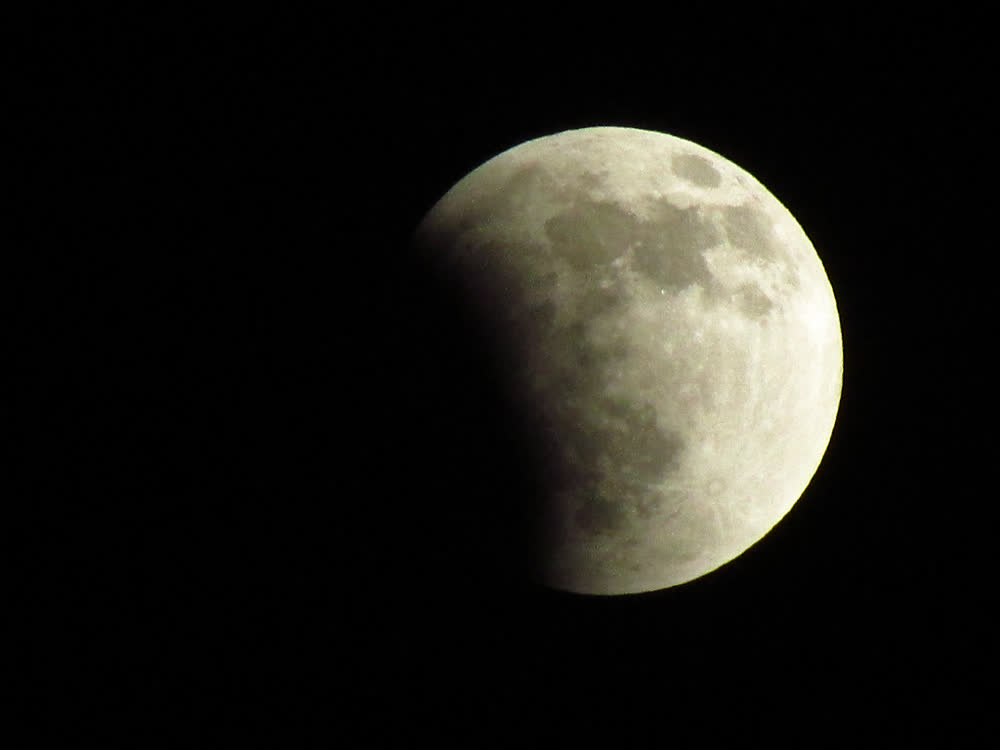
Like Rahu, Ketu has no body: it is a point where two paths cross. What we can see is its work. When a full Moon falls near the nodes, the Moon passes into Earth's shadow and slowly darkens to a deep copper colour, as in the photograph above.
What the tradition saw
In the story, Ketu is the body without a head: action without the noise of wanting. The real Ketu is the empty point opposite Rahu, and the eclipses that happen there are shadow work: the full Moon, for a while, withdrawn. The tradition reads Ketu as detachment, letting go and insight that does not need to explain itself. It is a fitting picture for a point with no body.
What Ketu means
In Vedic astrology
Ketu is a chhaya graha, a shadow planet. Like Rahu, it acts through its sign lord, its nakshatra lord and the planets with it. The traditional maxim "Kujavat Ketu" says Ketu behaves like Mars: sharp, sudden, cutting. Its common significations:
- Detachment and liberation — Ketu is often called the moksha karaka, the significator of liberation. In the Jaimini tradition, Ketu's relation to the 12th house from the karakamsha (the navamsa sign of the soul planet) is read for spiritual liberation.
- Inherited skill and instinct — what comes so naturally that it does not feel like an achievement; many astrologers read it as past-life learning.
- Spirituality and the occult — meditation, mysticism, astrology itself, hidden knowledge.
- Sudden events — abrupt endings, accidents, surprises, and also sudden realisations.
- Precision and the fine point — needles, surgery, mathematics, code; Ketu is single-pointed.
- Nature — a natural malefic, fiery in temperament, linked with flags, smoke and fire in classical texts.
Dignities are disputed, as with Rahu. One school gives Ketu exaltation in Scorpio and debilitation in Taurus; another gives Sagittarius and Gemini. Some give it co-rulership of Scorpio with Mars; others give it Pisces. Sunyra names its convention and does not lean heavily on node dignity.
KP astrology. In Krishnamurti Paddhati, Ketu, like Rahu, gives the results of the planets it is conjoined with or aspected by, and of its sign and star lords.
Lal Kitab. Ketu's permanent house (pakka ghar) in Lal Kitab is the 6th, and it is linked with dogs, sons and travel; Lal Kitab's house-specific remedies for Ketu are their own system.
Ketu's nakshatras are beginnings. Ashwini, Magha and Mula, the three nakshatras ruled by Ketu, each open one of the three nine-nakshatra cycles and each begins a fire sign (Aries, Leo, Sagittarius). The junction where a water sign ends and a fire sign begins (gandanta) is considered spiritually sensitive — fitting for the planet of endings that become beginnings.
In Western astrology
Medieval Western astrology called the South Node malefic. Modern evolutionary astrology reads it as the place of comfort and mastery we bring into this life — real gifts, but also habits we can hide in. Growth is said to come by moving toward the North Node while drawing on the South Node's skills rather than living only from them.
Strengths
Ketu gives depth, intuition, focus and a quiet freedom from ordinary ambition. People with a strong Ketu are often naturally gifted in an area they cannot explain, unusually perceptive, and able to let go of things others cling to. It is a common signature in researchers, healers, mystics, and anyone who works with precision and patience.
Challenges
Ketu can feel like absence: disinterest in the area of life it touches, a sense that something is missing, or a tendency to withdraw. It can bring sudden losses or separations, and a heavily afflicted Ketu may describe confusion, isolation or self-undoing. The tradition's counsel is to treat Ketu's detachment as freedom rather than loss, and to bring the skills it gives into service.
In relationships
Ketu in or connected with the 7th house is traditionally read as detachment in partnership — a spiritual or unconventional bond, a partner who seems familiar from the start, or a relationship that asks for space. In Western synastry, contacts with the South Node often feel strangely familiar, comfortable and sometimes binding.
In career and work
Ketu favours research, technical and precise work (programming, mathematics, surgery, engineering detail), spiritual and healing vocations, astrology and the occult, linguistics, and work behind the scenes. Ketu in the 10th can describe a career that is a calling, or a person who cares more for the work than the title.
Health as wellbeing
Ketu is traditionally linked with sudden, hard-to-diagnose conditions, injuries from sharp objects, and the nervous system. As wellbeing, Ketu asks for grounding — enough sleep and food, time in the body, and care not to ignore physical needs in the pursuit of other things. These are traditional associations, not medical advice.
How Ketu changes by placement
- By sign. Ketu takes the colour of the sign and its lord: in fire signs it is spiritual and fearless; in earth signs practical and detached from possessions; in air signs intellectual; in water signs intuitive and psychic.
- By house. Ketu in the 12th is classically associated with spiritual liberation; in the 3rd, 6th and 11th it is considered well placed for effort and competition; in the 1st it gives an intense, inward identity; in the 4th it can bring detachment from home or a move away from one's roots.
- By conjunction. Ketu with the Sun or Moon is an eclipse combination, read carefully for identity and emotion; with Jupiter it is spiritual wisdom; with Mars, sharp courage; with Mercury, technical and analytical skill.
- By nakshatra. Ketu's nakshatras — Ashwini (healing speed), Magha (ancestral dignity) and Mula (getting to the root) — show three kinds of beginning.
The Ketu dasha (Vimshottari)
The Ketu mahadasha lasts seven years. It follows Mercury's seventeen years and opens the cycle again with Venus's twenty. Those born with the Moon in Ashwini, Magha or Mula begin life in Ketu's dasha. Ketu periods are often inward or transitional: endings that clear space, spiritual interest, study of subtle subjects, travel, and changes that seem sudden at the time and sensible later. Because Ketu acts through its dispositors, the period's tone depends heavily on the rest of the chart.
Vedic and Western views compared
Both traditions treat the south node as the counterpart to the north: Rahu or the North Node pulls forward; Ketu or the South Node holds what is past and familiar. Vedic astrology gives Ketu full graha status with its own dasha and nakshatras, and a strongly spiritual reading as significator of liberation. Medieval Western astrology saw it as malefic; modern Western astrology sees it as comfort and inherited gift. Dignities are disputed in the Vedic texts and mostly ignored in the Western.
Traditional remedies
For Ketu the tradition recommends worship of Ganesha, recitation of the Ketu mantra, charity of multi-coloured blankets or horse gram, feeding dogs (a classic Lal Kitab remedy for Ketu), and spiritual practice such as meditation. Cat's eye is the traditional gem, recommended only after a full chart reading. These are traditional practices, not guarantees.
FAQ
Is Ketu always bad? No. It is a natural malefic but also the significator of liberation and deep skill. Well placed, it can be one of the most spiritually rewarding factors in a chart.
Why is Ketu linked with past lives? Because it represents what is already known and instinctive. This is an interpretive tradition, especially strong in modern astrology, not a claim the classical texts make in those words.
Are Rahu and Ketu always opposite? Yes. The mean nodes are always exactly 180° apart.
How long is the Ketu dasha? Seven years in the Vimshottari system.
Which god is worshipped for Ketu? Ganesha is the deity most often worshipped for Ketu in traditional practice.
Sources
- Rigveda 1.6.3
- Mahabharata, Adi Parva (churning of the ocean)
- Bhagavata Purana 8.9; Vishnu Purana 1.9
- Varahamihira, Brihat Samhita ch. 5 and ch. 11 (Ketu-chara, comets)
- Brihat Parashara Hora Shastra, ch. 2–3 (Santhanam)
- Jaimini Upadesha Sutras (karakamsha and liberation)
- K. S. Krishnamurti, KP Readers
- Lal Kitab (1939–1952 editions)
- William Lilly, Christian Astrology (1647), Book I
- D. R. Williams, NASA NSSDCA Moon Fact Sheet, 2025
- F. Espenak, NASA GSFC, Eclipses and the Moon's Orbit
- Jeff Hollett, Image: Total Lunar Eclipse 'Blood Moon', April 14, 2014 — public domain

Written by Sunyra Editorial. Astrology is a tradition of interpretation; read this as guidance, not a forecast. Disclaimer.
Last reviewed