On this page
In short: The nine grahas of Jyotish were named and described long before anyone could photograph them. Now we can. The real planets turn out to mirror their old meanings in ways that are easy to remember. Saturn has no floor and only grows denser and denser, like patient labour. The Sun gives light by spending its own mass every second. Rahu and Ketu have no bodies at all, only the shadows of eclipses.
Sun (Surya): it gives by spending itself
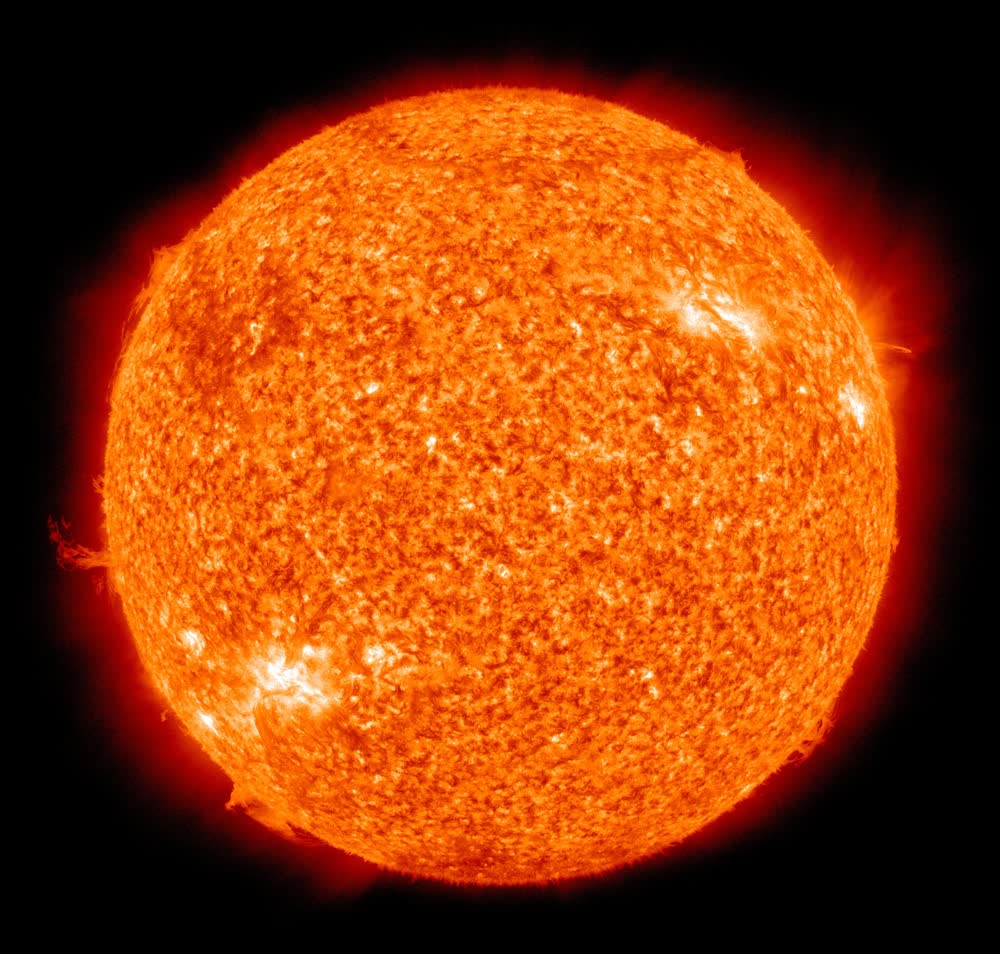
- Every second the Sun turns about 4.3 million tonnes of its mass into light and heat (NASA: 4,260 million kg a second, E = mc²). The solar wind carries off roughly a million tonnes more (estimates vary).
- It is so vast that in 4.6 billion years it has lost well under a tenth of one percent of its mass.
- Its light reaches us in about 8 minutes 19 seconds on average: about 8:11 in early January and 8:27 in early July.
- It holds about 99.8 percent of all the mass in the solar system.
What the tradition saw: Surya is the soul, the father, the king, the giver of life. The real Sun gives by spending itself, steadily, whoever is watching. That is dignity without hoarding. More about the Sun →
Moon (Chandra): no light of its own
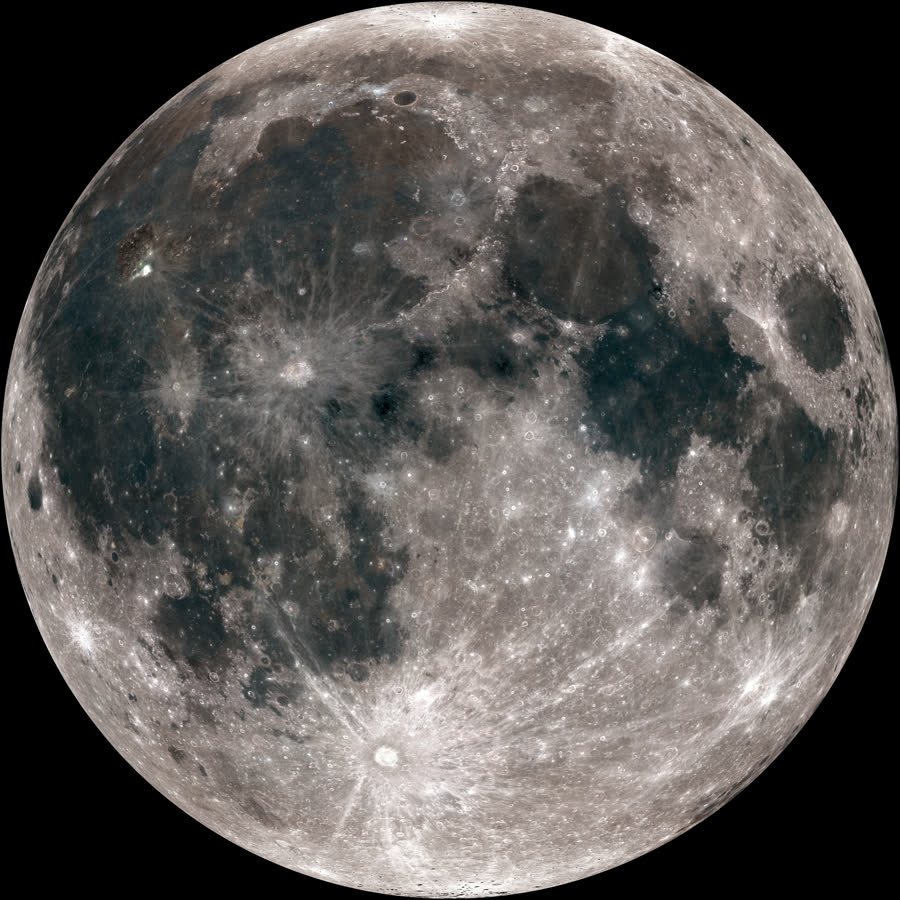
- The Moon shines only by reflected sunlight and reflects just 11 to 12 percent of it. It is about as dark as worn asphalt, yet it is the brightest thing in our night sky.
- It turns once in 27.3 days, the same as its orbit, so it always shows us one face. The far side is not dark, only unseen.
- It is the main driver of the tides. The Sun adds a tide-raising force a little under half the Moon's.
- It is drifting away from Earth by about 3.8 cm a year.
What the tradition saw: Chandra is manas, the mind. It shines with what it receives, shows the world one face and rises and falls like the waters. This is a symbol, not a measured effect of the Moon on people. More about the Moon →
Mars (Mangal): iron and fire
- Mars is red with iron oxide, which is rust, in its dust and rocks. Our blood is red with iron too, but in haemoglobin: the same element in a different compound.
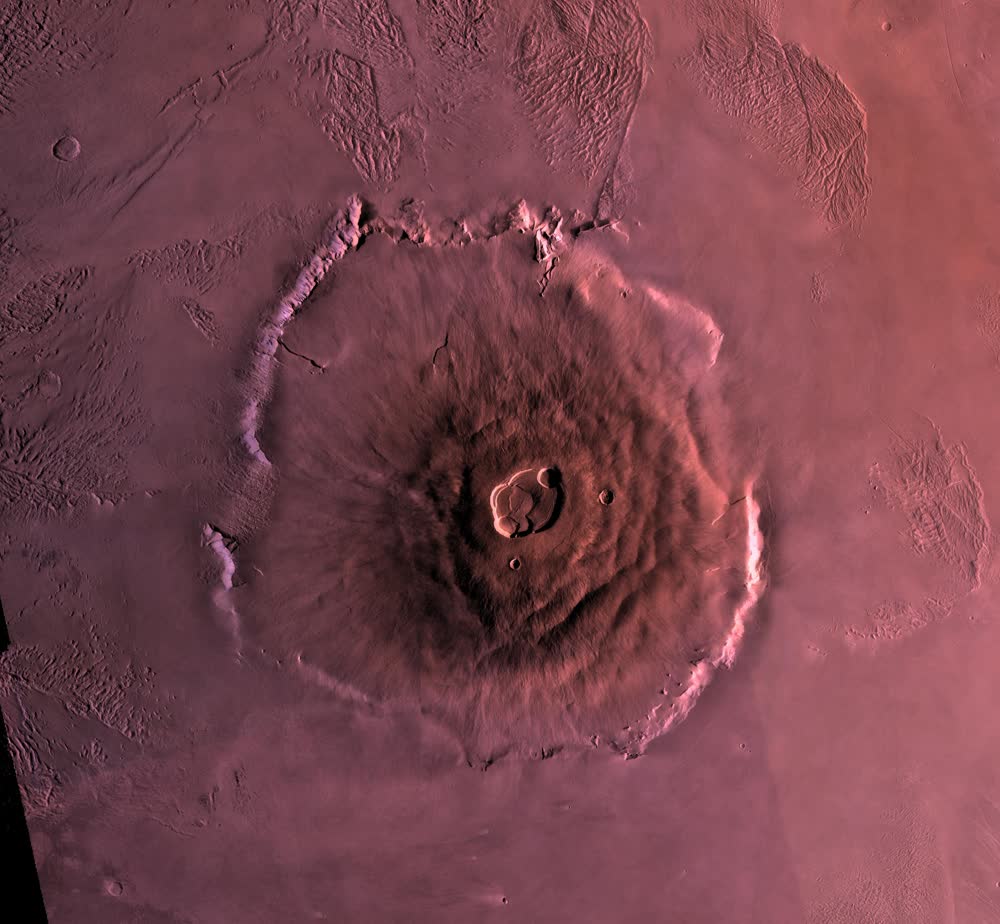
- Olympus Mons, the tallest volcano we know, stands about 22 km above the planet's mean level (27 km from its base, in NASA/JPL's caption) and some 600 km wide.
- Its two small moons are Phobos ("fear") and Deimos ("dread").
What the tradition saw: Mangala is courage, blood, energy and the will to act. Olympus Mons shows force that keeps pushing in one direction over long ages: energy that stays on course. More about Mars →
Mercury (Budh): the quick go-between
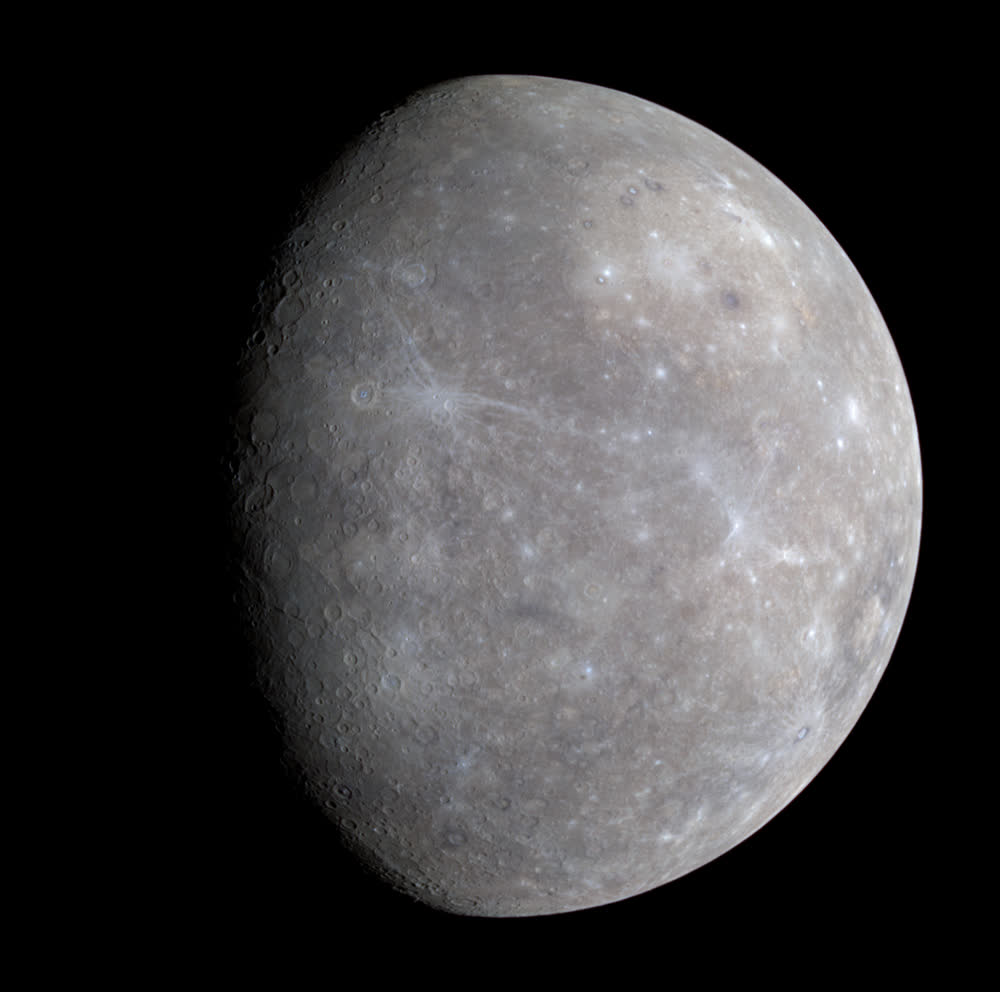
- It is the closest planet to the Sun and the fastest: one orbit in 88 days, at about 47 km a second.
- Averaged over time, Mercury is the closest planet to Earth, and to every other planet (Physics Today, 2019).
- Its year is quick but its day is slow: one sunrise to the next takes 176 Earth days.
- It is not the hottest planet; Venus is.
What the tradition saw: Budha is the messenger: speech, trade and learning. The fastest traveller, and the nearest neighbour to everyone, is a natural go-between. More about Mercury →
Jupiter (Guru): the protector who also redirects
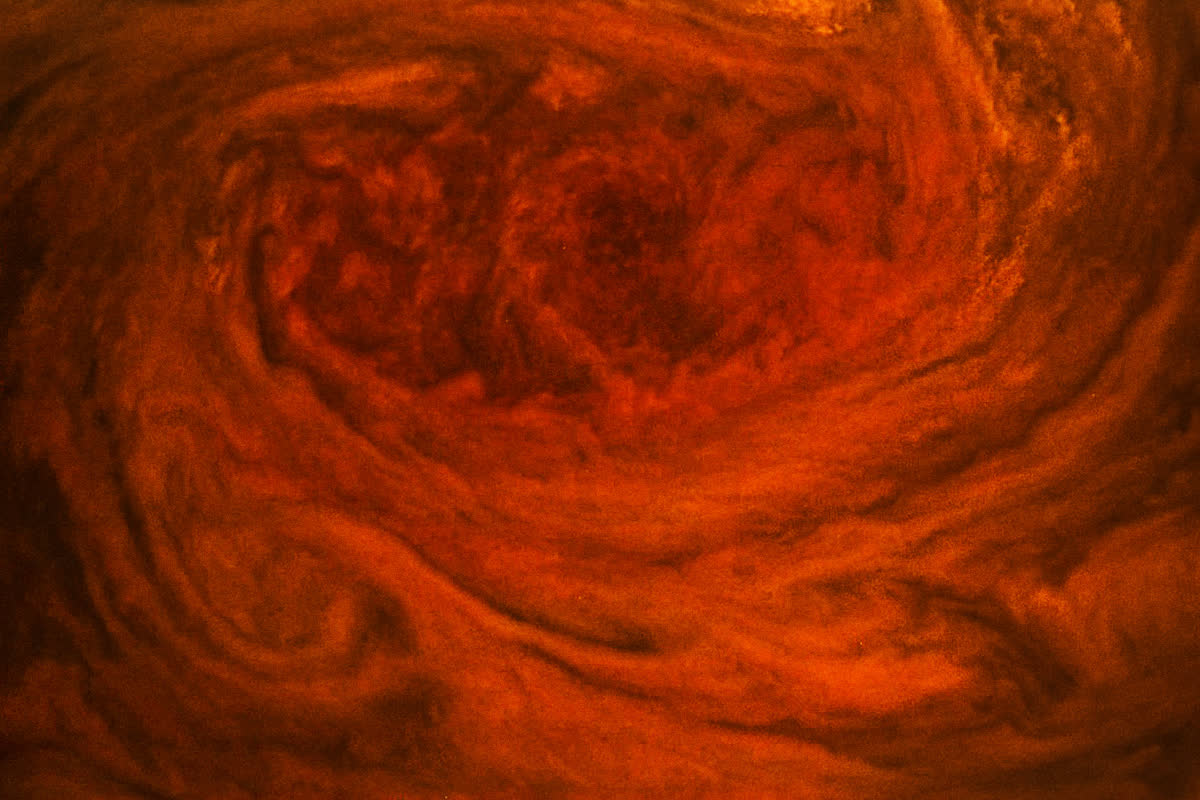
- Jupiter is the largest planet, with about two and a half times the mass of all the other planets combined.
- It is often called Earth's shield. It does fling many long-period comets away, and in 1994 it took the impacts of comet Shoemaker–Levy 9. But simulations show it also nudges some asteroids and short-period comets inward, so on balance it is no simple wall.
- It spins the fastest of all the planets, with a day of under ten hours.
What the tradition saw: Guru is the teacher and protector. The real Jupiter protects, but not by keeping everything away. Protection is not the same as comfort. More about Jupiter →
Venus (Shukra): beauty behind a veil
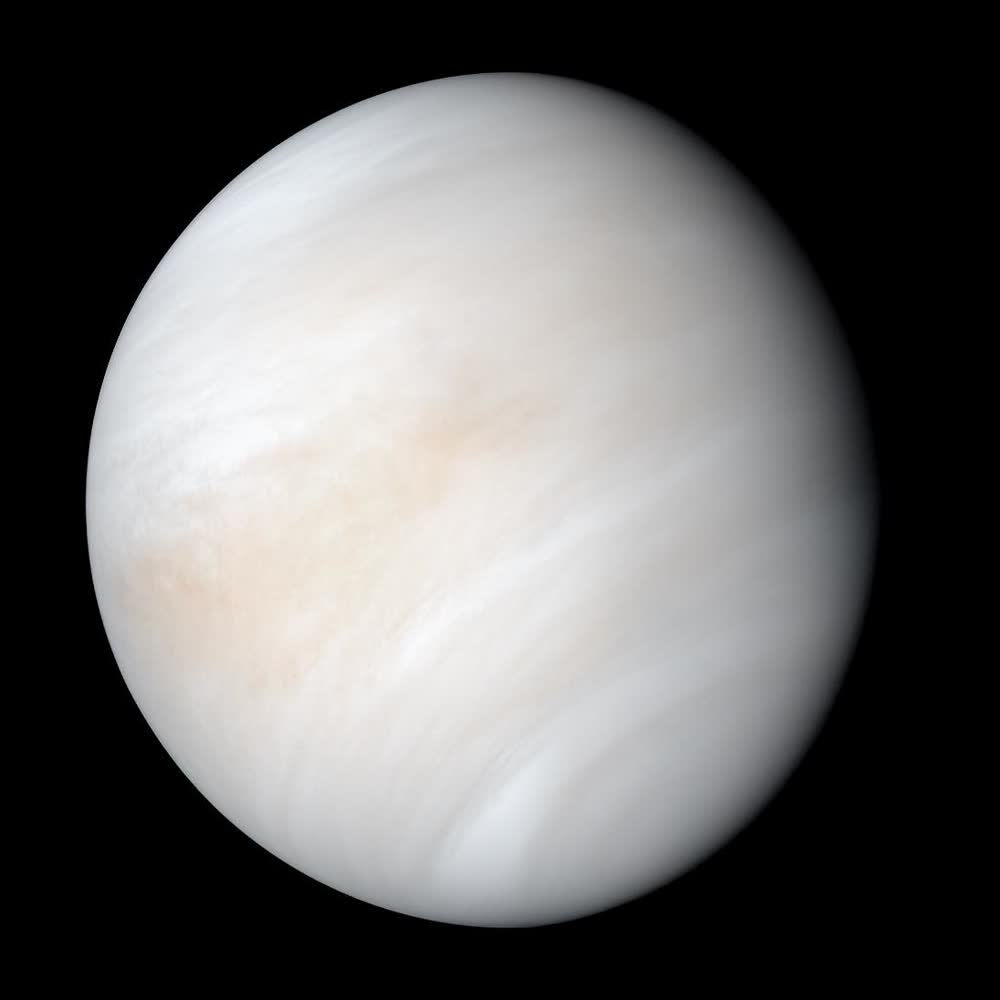
- Venus is the brightest planet, reaching magnitude −4.8. Only the Sun and Moon are brighter.
- Clouds of sulphuric acid veil it completely. Its ground was mapped by radar (Magellan, 1990–94).
- It has the hottest surface of any planet, about 464 °C, under 92 times Earth's air pressure.
- It rotates backwards, once in 243 days, which is longer than its 225-day year.
What the tradition saw: Shukra is beauty, love and refinement, and also Shukracharya, the teacher of the asuras. The loveliest light in the sky hides the most intense surface, and it turns the other way round. More about Venus →
Saturn (Shani): no surface, only depth
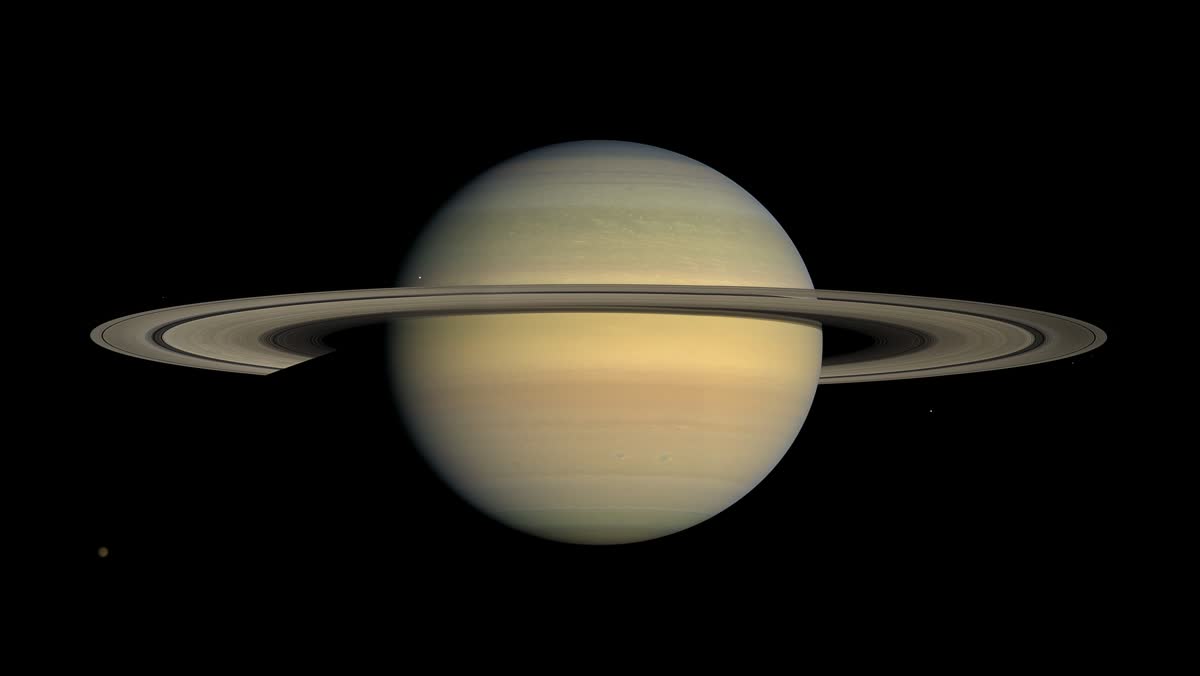
- Saturn has no solid surface. Its gas grows denser and hotter with depth, and even its core has no sharp edge: a diffuse core reaching about 60 percent of the way out (Cassini ring seismology, 2021).
- Its density is the lowest of any planet, 0.687 g/cm³, which is less than water. "It would float" is only a thought experiment.
- Its rings are mostly water ice, about 280,000 km across but often only about ten metres thick.
- It is the slowest of the visible planets, taking 29.4 years per orbit. Its Sanskrit name Śanaiścara means "the slow mover".
What the tradition saw: Shani is karma, patience, labour and time. There is no floor to reach, only depth that keeps building: keep doing, keep doing. More about Saturn →
Rahu and Ketu: points, not bodies
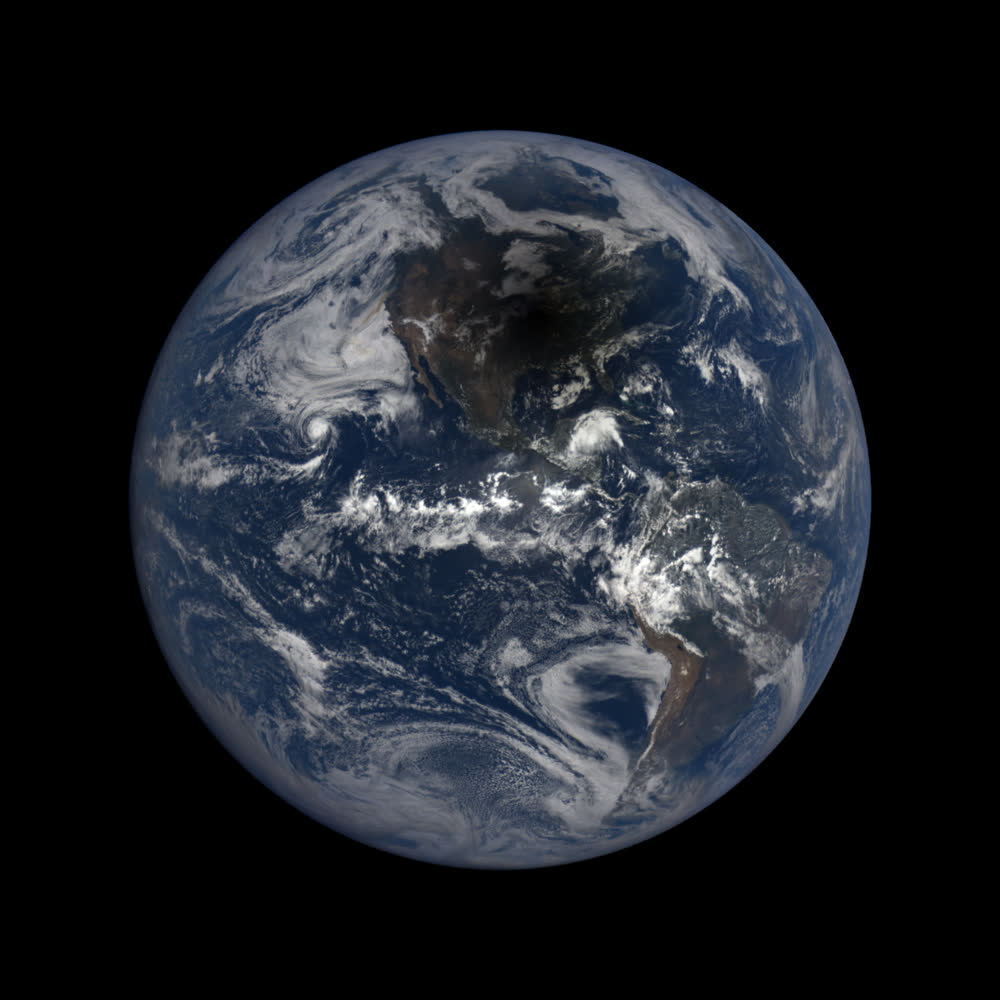
- Rahu and Ketu have no physical body. The Moon's orbit is tilted about 5.1° to the Sun's path, and the two places where they cross are the lunar nodes: Rahu, the north node, and Ketu, the south node, always opposite each other.
- The nodes drift backwards round the zodiac once in 18.6 years.
- Eclipses can happen only when a new or full Moon falls near a node, so they come in "seasons" about every 173 days.
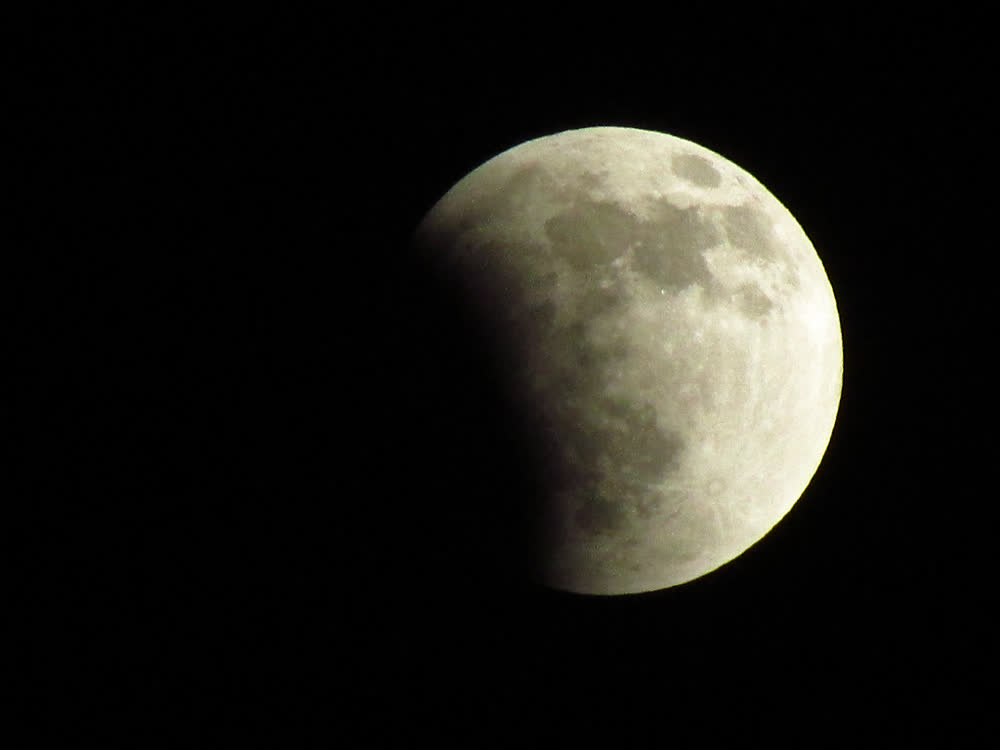
What the tradition saw: In the story, Rahu is the head that swallows the Sun and Ketu the body without a head. Their real nature is a point with no mass or light that can still darken the day. That fits desire and illusion (Rahu) and detachment (Ketu). Rahu → · Ketu →
Common claims, checked
| Common claim | What the sources say |
|---|---|
| "Sunlight takes 8 minutes 20 seconds to reach us." | About 8 min 19 s on average, from about 8:11 (January) to 8:27 (July). |
| "The Sun loses 4 million tonnes a second." | Close: NASA gives 4.26 million tonnes a second turned into light; the solar wind adds roughly another million (estimates vary). |
| "Jupiter shields Earth." | Only partly. It removes many long-period comets but also nudges some asteroids and short-period comets inward. |
| "Saturn would float in water." | Its density (0.687 g/cm³) is truly below water's; the floating is a thought experiment. |
| "The Moon makes the tides." | Mostly, but the Sun adds a force a little under half the Moon's. And the far side is not dark. |
| "Olympus Mons is 25 to 27 km high." | About 22 km above Mars's mean level; 27 km is the height measured from its base. |
| "Mars is red like blood." | Both are red because of iron, but rust and haemoglobin are different compounds. |
| "Venus is our closest planet." | Venus comes closest at times, but on average Mercury is nearer. |
| "Mercury is the hottest planet." | Venus is (about 464 °C); Mercury swings from about 430 °C to −180 °C. |
How to use this page
Read a graha's meaning on its own page and use the real planet as a memory hook. Shani's slowness, Surya's giving and Chandra's borrowed light are easy to picture once you have seen the photographs. Your own chart shows where each of these nine sits for you: make your free kundli.
Sources
- D. R. Williams, NASA NSSDCA Planetary Fact Sheets, 2025
- NASA Science, Sun: Facts
- NOAA National Ocean Service, Tides and Water Levels: What Causes Tides?
- NASA/JPL/USGS, PIA00300: Olympus Mons
- T. Stockman, G. Monroe, S. Cordner, Venus is not Earth's closest neighbor, Physics Today, 2019
- J. Horner, B. W. Jones, Jupiter, friend or foe? (series), International Journal of Astrobiology, 2008-2009
- C. Mankovich, J. Fuller, A diffuse core in Saturn revealed by ring seismology, Nature Astronomy, 2021
- F. Espenak, NASA GSFC, Eclipses and the Moon's Orbit
- Images: NASA (via Wikimedia Commons), public domain; lunar eclipse photo by Jeff Hollett, public domain
Written by Sunyra Editorial. Astrology is a tradition of interpretation; read this as guidance, not a forecast. Disclaimer.
Last reviewed